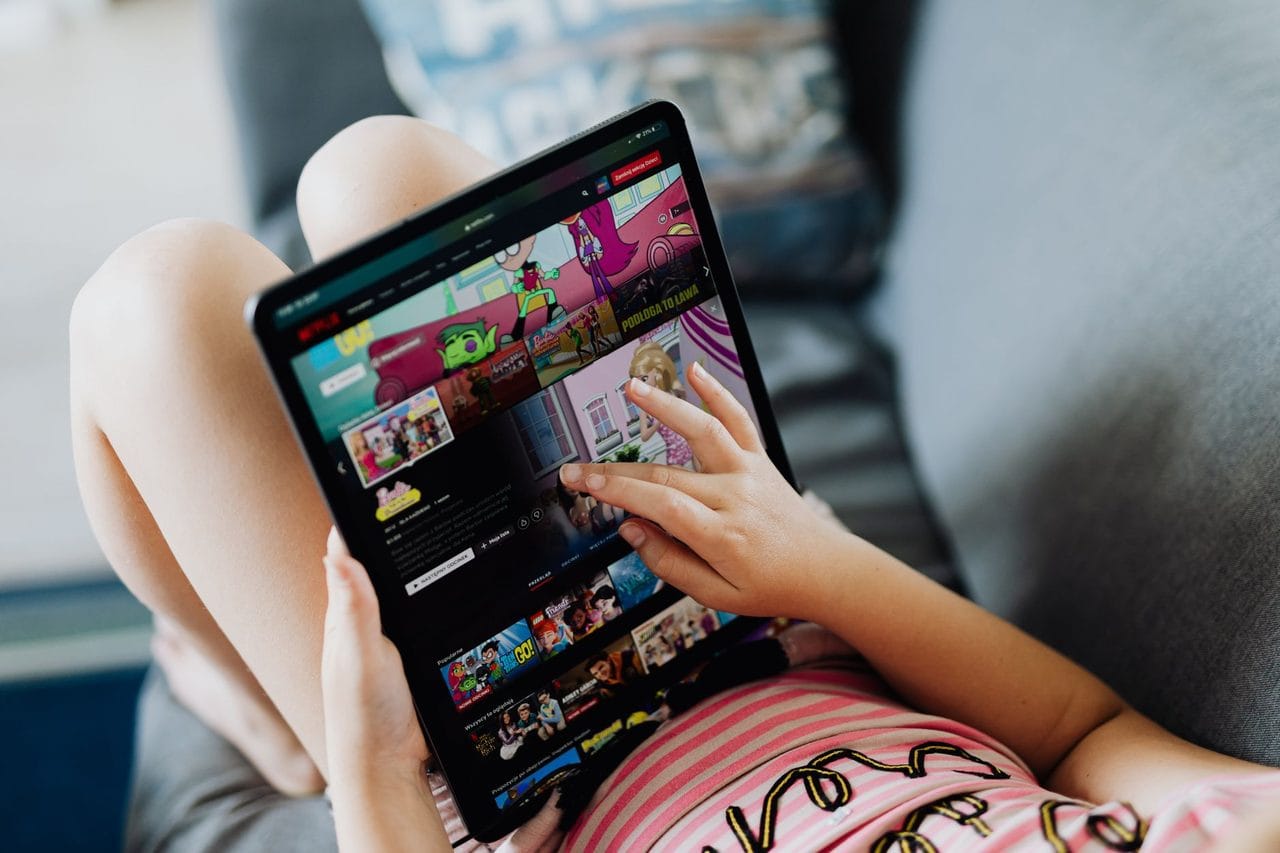
By the second week of August, the screen-time conversation in most houses has quietly collapsed. You started the holidays with a plan — an hour a day, maybe ninety minutes, tablets after lunch only. Then there was the heatwave, and the rainy stretch where nobody could go to the park, and the afternoon you needed to be on a work call and your six-year-old discovered that a YouTube video could be paused and rewound roughly four hundred times. The hour became two. The two became "I genuinely don't know how long it's been on." And somewhere in there the guilt set in, the specific low hum of feeling like you've failed at the one thing every parenting article tells you to control.
Here is the thing nobody puts on the leaflet at the GP surgery: a slightly higher screen total over six weeks of summer is not the thing that will shape your child. The pattern across the whole year matters more than any single fortnight, and a holiday is, by design, not a normal fortnight. So before we get into the actual plan, drop the idea that summer screen use has to look like term-time screen use. It doesn't, and pretending otherwise is what sets you up to fail by Wednesday.
Why the rigid hour-a-day rule falls apart
The clean numerical limit feels responsible. Sixty minutes, timer set, device handed back when it buzzes. It works beautifully in a week with structure — school runs, clubs, a predictable shape to the day. It falls apart in summer precisely because summer has no shape, and a rule that can't bend to a 34-degree afternoon or a five-hour car journey to your in-laws isn't a rule, it's a thing you break and then feel bad about. Every time you break your own limit, you teach yourself that your limits don't hold, which makes the next negotiation harder. The strict cap doesn't reduce screen time over a long holiday. It just adds a layer of guilt on top of the same screen time.
There's also a behavioural trap in the hard limit. When a thing is rationed by a countdown clock, it becomes the most valuable currency in the house. Children who know the tablet switches off at exactly 4pm spend the run-up to 4pm braced for loss, and the moment it goes off, the negotiating starts — five more minutes, just this one level, the video's nearly finished. You've turned a fairly neutral activity into the thing everyone wants most and fights about hardest. I'm not saying limits are pointless. I'm saying the rigid version, applied to a shapeless six weeks, tends to produce more conflict and not much less screen time.
Not all screen time is the same thing
The single most useful shift you can make this summer is to stop counting minutes and start noticing what's actually happening on the screen. There's a real difference between a child slumped sideways letting autoplay feed them clip after clip, and a child building something in Minecraft, following a Lego stop-motion tutorial, or video-calling their cousin in another city. The first is passive — it asks nothing of them and tends to leave them oddly irritable when it ends. The second is active, and it behaves much more like the other things we don't worry about, the way we don't ration how long a child spends drawing or building a den.
This isn't a licence to relabel everything as "educational" so you can feel better — a maths app the child hates is not magically better than a drawing app they love. The useful test is simpler: when the screen goes off, what's the mood? If they come away buzzing with an idea, asking for paper, or telling you about the thing they made, that session was probably doing them good. If they come away flat, snappy, and immediately desperate for more, that's the passive scroll, and that's the one to nudge them away from. Watch the after-mood for a few days and you'll start sorting their screen time into the stuff that fills them up and the stuff that hollows them out, which is far more useful than any number.
A loose hierarchy worth keeping in your head
- Creating and connecting — making, building, calling Grandma over video. The good stuff; don't agonise over the clock here.
- Watching something chosen with attention — a film together, a series they actually love and talk about afterwards.
- Background autoplay and the infinite scroll. This is the one that earns its bad reputation, and it's worth steering little ones off it before it becomes the default.
Most days will be a mix of all three, and that's completely fine. You're not aiming for a perfect ratio. You're just aiming to notice when the bottom category has quietly eaten the whole afternoon.
Build in friction instead of rules
The strategy that survives a real summer isn't a stricter rule — it's making the screen slightly less frictionless to reach, so the default drifts towards everything else. Friction does the work that willpower can't keep doing for six weeks. Keep the tablet charging in a kitchen drawer rather than living on the sofa, so picking it up is a small deliberate act rather than the thing your hand does while bored. Make the morning open with something physical before any screen appears — breakfast, getting dressed, ten minutes in the garden. None of this is enforced with a timer or a confiscation; it's just the shape of the day making the screen the second or third thing reached for, not the first.
Some friction that earns its keep in an ordinary week:
- Screens live in a shared room, not bedrooms — partly for the obvious reasons, partly because watching alone is when the passive scroll takes over.
- The device has to be asked for, not just grabbed. The asking is a tiny speed bump, and speed bumps add up.
- Tie screen time loosely to a transition rather than a clock — after lunch, or after we've been out, rather than "from 2 till 3." A child can argue with a clock. A child can't really argue with "we haven't been outside yet."
The honest catch with the friction approach: it takes a few days of slightly more whingeing to settle in, and it asks a bit more of you up front than barking "twenty minutes left" from the kitchen. The drawer is annoying. The "ask first" rule means you actually have to answer. But once it beds in, you're no longer the timer police, and that alone takes a surprising amount of heat out of the whole house.
When you genuinely need an hour of quiet
Sometimes you don't need a parenting philosophy. You need your three-year-old occupied for fifty minutes while you finish a piece of work, or take a phone call that can't be taken with a toddler climbing your leg, or simply sit down with a cup of tea before you say something you'll regret. On those days, the tablet is a tool, and using a tool you have to hand is not a moral failure. Hand it over. Pick something half-decent if you can — a film rather than the autoplay rabbit hole — and then let it go. The guilt you'd spend on it is worth more in your pocket.
What helps is naming it, even just to yourself: this is the quiet-hour screen, it's a different thing from the after-lunch screen, and it's allowed. A handful of those across a week is not the pattern that defines your child's relationship with technology — the other twenty hours awake each day are. Parents who are calm, present, and not running on fumes do more good than parents who held a perfect screen limit while quietly losing their minds. If forty minutes of a film buys you the capacity to be decent company for the rest of the afternoon, that's a fair trade, and you can stop apologising for making it.
Pour the tea. Shut the door. The tablet has bought you forty minutes — spend them on yourself, not on guilt.