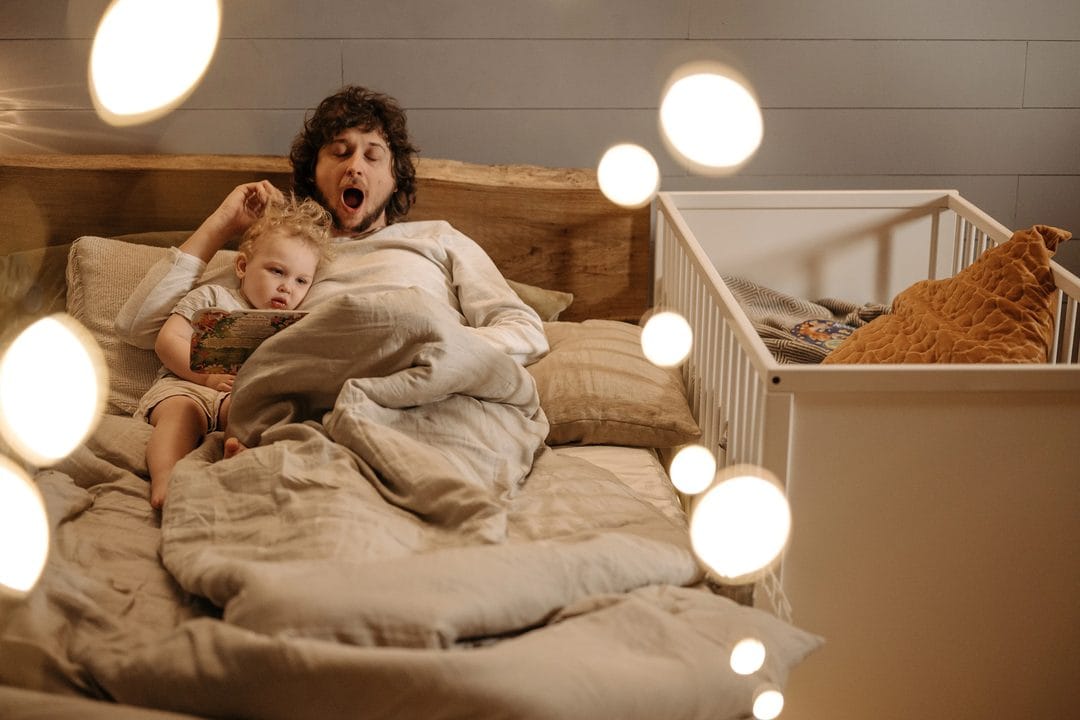
Somewhere around the third week of July, bedtime stopped meaning anything. The sun's still up at 8:15, the neighbor's kids are riding bikes past the window, and your five-year-old has developed a genuinely impressive list of reasons why lights-out is a personal injustice. By early August, most families have drifted 45 minutes to an hour past their school-year bedtime without ever deciding to — and with the first bell three or four weeks away, that gap is the thing that's going to make the first week of school miserable if it isn't closed gradually.
Why You Can't Fix It in One Night
The instinct the night before school starts is to announce a new bedtime and enforce it cold. That almost never works, and it's not a discipline problem — it's biology. A child's circadian rhythm, the internal clock that regulates when melatonin gets released, shifts slowly in response to light exposure and routine, not in response to a parental announcement. Yanking bedtime back by 45 minutes in one night means asking a child's body to fall asleep before it's actually producing the melatonin to do so, which produces exactly the meltdown you were trying to avoid — just moved to 8 p.m. instead of avoided entirely.
The American Academy of Pediatrics recommends 10-13 hours of sleep per 24-hour period for kids ages 3-5, and 9-12 hours for ages 6-12. Work backward from your actual wake-up time — the one dictated by the bus schedule or the drop-off window, not the leisurely 7:45 a.m. summer version — and that's your target bedtime. For most elementary-age kids waking at 7 a.m. for school, that lands somewhere between 7:30 and 8:30 p.m. depending on age. If your kid's currently going down at 9:15, you're not making a small adjustment. You're closing a 45-to-75-minute gap, and that takes two weeks done right, not one night done by force.
The Two-Week Shift
Move bedtime earlier in 15-minute increments every two to three nights, not all at once. If your target is 8:00 and you're currently at 9:15, that's five increments — roughly two weeks if you shift every two nights, closer to sixteen days if you go every three. Slower is genuinely better here: a 15-minute shift is small enough that a child's body clock can follow it without a fight, while a 30-minute jump reliably triggers the "I'm not tired" standoff that turns into an hour of renegotiation at the door.
- Days 1-3: Shift bedtime 15 minutes earlier. Keep the wake-up time exactly where it currently sits, even on weekends — this is the step families skip, and it's the one that matters most.
- Days 4-6: Shift another 15 minutes. Start dimming household lights an hour before the new bedtime; blue light from screens and overhead lighting actively suppresses melatonin production.
- Days 7-9: Another 15-minute shift. This is usually where the pushback peaks — the "witching hour" of the whole process — because the new bedtime finally feels early enough to notice.
- Days 10-14, continue shifting until you land on the actual school-year target, then hold it there for at least three nights before school starts so the routine isn't brand new on day one.
Expect the middle stretch to be the hardest part of the two weeks, not the end.
What Actually Helps the Shift Stick
Light exposure does more work than any other single factor. Get kids outside in bright morning light within 30 minutes of waking — even 10 minutes on the porch with cereal works — because morning light exposure is what resets the circadian clock fastest, more reliably than the bedtime routine itself. In the evening, the opposite matters: blackout curtains make a measurable difference for kids in northern latitudes trying to fall asleep while it's still light outside in July and early August. A $25-$35 set from Amazon Basics or IKEA's Blahörn line handles most standard windows, and for a bedroom that gets brutal afternoon sun, it's worth the $8 more for a triple-weave blackout rather than the thin single-layer version.
White noise helps for a different reason — it masks the sound of siblings still awake, or a TV in the next room, or the neighbor's cookout running until 9:30. The Hatch Rest (around $60) doubles as a sunrise alarm clock for the morning wake-up, which is a genuinely useful two-in-one if you're buying new; a $15 basic white noise machine from Marpac does the sound-masking job just as well if the sunrise feature isn't worth the extra cost to you.
Screens are the piece worth being blunt about: cut them out entirely 60 minutes before bedtime, not "turned down" or "on a dimmer setting." The research on blue light and melatonin suppression is strong enough that a dimmed screen still measurably delays sleep onset compared to no screen at all. Swap the last hour for a bath, a book, or — if your kid's past the bath stage — quiet time with a physical book and a reading lamp instead of a tablet.
When the Shift Doesn't Go Smoothly
Some kids resist every single 15-minute increment, and if that's your household, it's worth naming honestly: a two-week gradual shift assumes a reasonably flexible sleeper, and not every kid is one. A child who's naturally a night owl, or who's dealing with separation anxiety, or who's overtired in a way that actually makes falling asleep harder rather than easier, may need three weeks instead of two, or a modified version where the first few shifts are 10 minutes instead of 15. If bedtime is still a nightly battle after three weeks of consistent effort, that's worth a conversation with your pediatrician rather than more willpower from you.
One thing that doesn't get said enough: weekends inside the two-week window are not a break from the plan. A single Saturday night pushed back to 9:30 "because it's summer" resets almost all the progress from the week before, because the body clock responds to the most recent pattern, not the average. If you're doing this shift, it has to run seven days a week, including the two weekends before school starts. That's the part that actually determines whether the first Monday morning goes smoothly or becomes a repeat of every groggy, tears-at-breakfast first week you've had before.
The Morning Is Part of the Plan Too
A bedtime shift only works if the wake-up time is locked in alongside it. Kids who are allowed to sleep in until 8:30 on a Tuesday because bedtime was rough the night before are getting a signal that undoes the whole schedule — their body clock recalibrates around whichever wake time actually happens, not the one on the chart on the fridge. Hold the wake-up time firm from day one of the shift, even when it means a cranky 6:45 a.m. for the first few mornings. That short-term crankiness is the trade-off that makes the rest of the two weeks work.
By the time the first day of school actually arrives, the goal isn't a miracle — it's a kid whose body already expects to be asleep by 8:00 and awake by 7:00, because that's what's happened every night for two weeks running. The alternative is walking into the first week of school with a kid who's still operating on July's clock, running on four fewer hours of sleep than the AAP recommends, during the exact week you need them at their most regulated.