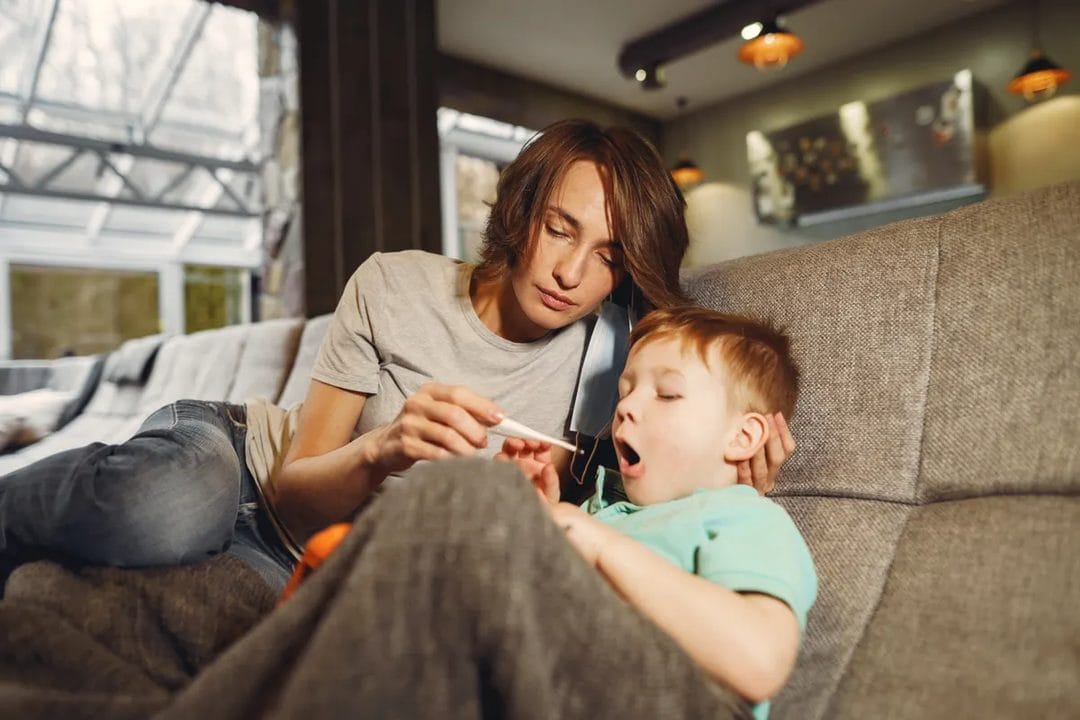
Three weeks into the school year, right when you'd finally stopped triple-checking the backpack for the folder with the yellow sticker, your kid wakes up radiating heat through their pajama shirt. Not "maybe I'm coming down with something" warm — the kind of warm where you press the back of your hand to their forehead twice because you want the first reading to be wrong. It's a Tuesday. You have a 9 a.m. that you can't move, your partner has a 9:30 that genuinely can't move either, and the babysitter you used all summer went back to her own classes two weeks ago. This is the sick day nobody puts on the calendar, and somehow it always lands on the one week you had zero slack built in.
The 24-Hour Rule Nobody Explains Until You're Already Trapped by It
Most schools and daycares now enforce a fever-free window before a kid can come back — 24 hours without medication in some districts, 72 hours if a doctor's note is required for anything resembling a rash. Nobody hands you this policy on orientation day; you find it buried in page fourteen of the family handbook, usually the same afternoon you need it. Here's the part that actually wrecks a week: a 101°F fever at 7 a.m. that Tylenol brings down to 99°F by noon does not count as fever-free. The clock only starts once the fever is gone without medication, which means a kid who feels totally fine by dinner can still be out of school on Thursday because the fever technically broke at 2 p.m. Wednesday, not Tuesday night like you'd hoped.
This is where the math gets ugly. One sick day quietly becomes two, sometimes three, and every district seems to interpret "fever-free" slightly differently — some measure from the last dose of medication, others from the last recorded temperature spike. Call the school nurse's line directly instead of guessing from the handbook; ours moved the return date by a full day once she explained they count from the final fever reading, not from when the Tylenol wore off.
The Slack Message You Rewrite Four Times
You open the message to your manager and type "Hey, kiddo's sick, I'll need to—" and then delete it because it sounds too casual for a day you're about to hand off a client call. You try again: "Apologies for the short notice, my daughter has a fever and I need to take today as—" and delete that one too, because now it sounds like you're building a legal case for yourself. The honest version is somewhere in between, and it takes four drafts to land on it. Send the two-line version. Nobody at work is grading your syntax, and the manager who is going to give you a hard time about a sick five-year-old was never going to be reasonable about anything else either.
If you work somewhere with unlimited or loosely tracked PTO, use it like it's real, because functionally it is — the goodwill runs out the same way finite days do, just less visibly. If you're hourly or gig-based and this day comes out of actual pay, that's a different, harder conversation, and no amount of message-drafting fixes the math on a missed shift.
The PTO Math You Do in the Shower
By the second sick day of September, you and your partner are running a spreadsheet neither of you wrote down: who has fewer days left, whose boss is more forgiving, whose meetings this week can actually be moved to a phone call from the living room. In a lot of households this math still defaults to whoever earns less or whoever's job is seen as more flexible, and that's usually the mom, even in 2026, even in households that would insist out loud that they split things evenly. Track actual sick-day usage for one full school year — not a vague sense of "we split it" — and look at the real number in December. If it's lopsided, that's worth a five-minute conversation before flu season, not an argument in the pickup line in November when everyone's exhausted and nobody wants to hear it.
The Couch Days Are Their Own Kind of Hard
Somewhere between the ninth episode of whatever show is currently the background noise of your living room and the third bowl of dry cereal because nothing else sounds good to a stomach that's off, your kid stops being clingy in a way that's manageable and starts being clingy in a way that means they want to sit directly on your lap while you try to type. This is where the working-from-home sick day quietly becomes its own genre of exhausting — not the physical work of nursing them, but the split attention of drafting an email with one hand while holding a cup of water steady with the other. A laptop propped on the coffee table and a kid tucked under a blanket next to you gets you through maybe sixty percent of a normal workday, and that's a realistic number, not a failure.
The parenting influencers who post the perfectly staged sick-day setup — tray table, herbal tea, a stack of library books arranged like a magazine shoot — are not lying, exactly, but they're also not filming the part where the kid throws the tray table's tea across the couch cushions twenty minutes later. Your version, with the blanket half on the floor and a laptop balanced on a stack of picture books because the coffee table is currently a fort, is the normal one.
The Kid Who Bounces Back Faster Than You Do
Here's the twist nobody mentions: by Wednesday afternoon, your kid is bouncing off the couch cushions, asking for a snack, fully recovered and mildly offended that they still can't go to school. You, meanwhile, are running on the same four hours of broken sleep from checking their temperature at 2 a.m., plus a full day of guilt-toggling between the laptop and the couch, plus whatever work actually has to get redone tonight because today's version happened one-handed. The 24-hour rule protects the classroom, not you — and there's no handbook page for the parent who's now more depleted than the patient. Lower the bar for that evening on purpose. Order the pizza. The inbox will still be there tomorrow, and it will look far less urgent once you're not typing it next to a thermometer.
What Actually Helps
Skip the pediatrician visit for a straightforward fever under 102°F with no other red-flag symptoms unless it lasts more than three days — most insurance plans charge a copay for a visit that ends with "keep doing what you're doing," and a nurse hotline call is free and faster. Do call if a fever in a child under two hits 104°F, if there's a rash that doesn't fade under light pressure, or if breathing looks labored — those are the actual thresholds pediatric nurse lines use to triage, not general anxiety about a warm forehead.
Build a real backup-care list before the season starts, not during the emergency itself — one grandparent, one neighbor with a flexible schedule, one paid backup-care service through your employer if you have one (Bright Horizons and Care.com both run employer-sponsored backup daycare programs that a surprising number of companies already pay for and employees never activate). And keep a stocked "sick day bin" — infant Tylenol or children's ibuprofen at the correct current-weight dose, a working digital thermometer with batteries that aren't dead, electrolyte popsicles, a couple of "only for sick days" shows or books saved specifically so they still feel special in October. None of this prevents the 7 a.m. forehead check. It just means the day that follows doesn't also require a frantic drugstore run with a feverish kid buckled in the back seat.