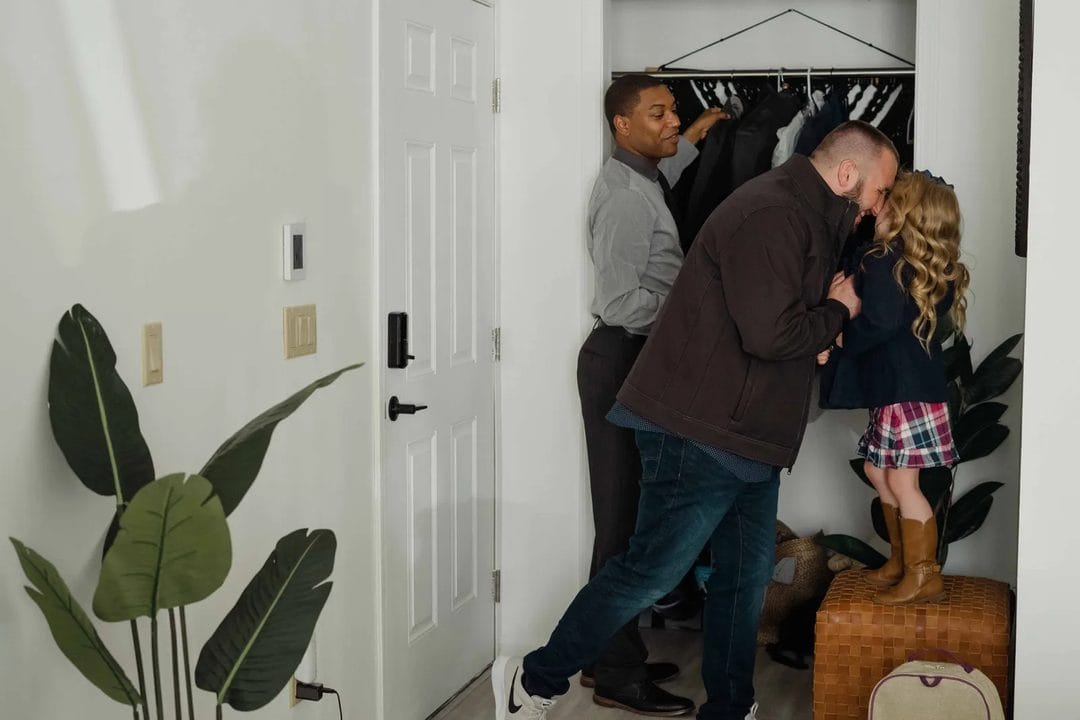
Jenna Torres knows the exact spot on the daycare hallway floor where her son Mateo drops to his knees and refuses to stand up. It happens at the same tile, every single weekday morning, usually around 7:40, right after she's said goodbye and turned toward the door. For three weeks straight, a teacher has had to peel his fingers off her cardigan hem one at a time while he screams her name loud enough that other parents in the parking lot can hear it through the glass. And then, according to that same teacher, he stops crying within ninety seconds of Jenna's car pulling out of the lot and spends the rest of the morning building block towers like nothing happened. None of this means Jenna is doing something wrong, and it doesn't mean Mateo hates daycare. It means he's fourteen months old, which happens to be one of two ages when separation anxiety peaks hardest — and almost no parent gets warned about the second wave.
Why the Crying Comes in Waves, Not One Long Phase
Separation anxiety isn't a single phase that starts and ends — it arrives in at least two distinct waves, and the timing lines up with specific cognitive milestones rather than random moodiness. The first wave typically shows up between eight and ten months, right around when babies develop what psychologist Jean Piaget called object permanence: the understanding that a person who's out of sight still exists somewhere, doing something, without them. Before that milestone, out of sight genuinely meant out of mind. After it, a baby who can't see their parent knows that parent has gone somewhere specific and hasn't taken them along, and that realization is often what triggers the first real drop-off tears. A second wave tends to land between eighteen and thirty months, once toddlers have enough language and independence to actually protest the separation instead of just registering it — this is the wave that blindsides parents who assumed the hard part was already behind them at twelve months. Zero to Three, the national nonprofit that trains pediatric providers on early childhood development, lists both waves as developmentally typical, not a sign that daycare placement is wrong or that a child is unusually clingy.
The Goodbye Ritual That Actually Works
It gets worse before it gets better.
Daycare directors describe the same pattern over and over: the goodbye ritual matters more than almost anything else a parent controls in this situation. A consistent sequence — one hug, one specific phrase, one wave through the window — gives a toddler a predictable end point instead of an open-ended goodbye they have to keep renegotiating. If you're the parent standing in that hallway wondering whether ninety seconds is really enough, it is — the length of the goodbye has far less influence on the rest of the morning than what happens in the sixty seconds right after you're both out of each other's sight. Skip the sneak-out — it backfires almost every time, because a child who discovers a parent vanished without warning starts monitoring for it constantly, which makes the clinginess worse over the following days instead of better.
Transitional Objects Aren't a Crutch
British pediatrician and psychoanalyst Donald Winnicott coined the term "transitional object" back in 1953 for exactly this situation — a blanket, a stuffed animal, or a small item that carries a parent's presence into a room the parent can't physically occupy. A laminated photo card clipped to a diaper bag, a worn t-shirt tucked into a cubby, or the family's actual well-loved teddy bear all serve the same function: they give a toddler something tangible to hold onto during the exact minutes when the missing parent is most present in their mind. Most daycare centers, including national chains like KinderCare and Bright Horizons, allow one small comfort item from home for children under three, largely because staff have watched how much faster the crying resolves once a child has something to grip. This works beautifully for most toddlers — unless the child is the type who melts down again the second a teacher tries to put the item away for group time, in which case the fix isn't removing the object, it's negotiating a spot where it stays visible in the cubby instead of disappearing into a backpack.
Timing the Drop-Off Changes Everything
When a child arrives matters almost as much as how the goodbye happens. Daycare staff consistently report that drop-offs timed right before a favorite activity — sensory bins, outdoor time, circle time with a favorite teacher — go noticeably better than drop-offs into unstructured free time, because there's an immediate replacement for the parent's attention instead of an empty stretch to fill with worry. Arriving hungry or already overtired multiplies the distress; a toddler who skipped breakfast because the family was running late doesn't have the reserves to self-regulate through a hard goodbye, and the crying that follows often has as much to do with blood sugar as with attachment. Feed breakfast at home before the drop-off, not in the classroom — even crackers and milk in the car works, and it removes one more variable a tired toddler has to manage during the hardest transition of the day.
The Guilt Spiral Nobody Warns You About
There's a financial layer to this that makes the guilt worse, and almost nobody says it out loud. The national average annual price of child care reached $13,184 in 2025, according to Child Care Aware of America's most recent price-of-care report, which means a lot of parents are handing over more than a car payment's worth of money every month to watch their child cry at the door for it. That math makes the tears feel like proof the whole arrangement is wrong, and it isn't — a toddler's distress at separation is not a review of the childcare, any more than a baby crying during a diaper change is a review of the parent doing the changing. You are allowed to feel your stomach drop every single morning and still believe daycare is the right call for your family; those two things exist at the same time, not in competition. The parents who get through this stage fastest aren't the ones who stop feeling guilty — they're the ones who stop treating the guilt as information about whether they made the right choice.
When It's More Than Adjustment
Typical separation anxiety fades within the first two to three weeks of a schedule change — a new classroom, a new sitter, a return from a long break — and shows up almost exclusively at the moment of separation itself, not for hours afterward. What's not typical, according to the diagnostic criteria the American Psychiatric Association lays out for separation anxiety disorder in the DSM-5, is distress that persists for four weeks or longer and starts interfering with daily functioning beyond the daycare door. A few signs worth flagging to a pediatrician rather than waiting out:
- Distress that lasts longer than three to four weeks after a schedule change, rather than gradually tapering
- Physical complaints — stomachaches, headaches, or nausea that show up specifically on drop-off mornings and disappear by mid-morning
- A child who starts refusing sleepovers, birthday parties, or even separate rooms at home, not just the daycare door
- Sleep and appetite changes that show up together, among other daily-routine shifts worth mentioning at the next well-child visit
A pediatrician visit is worth scheduling if a child who was previously fine at daycare suddenly regresses hard after a family disruption — a move, a new sibling, a parent's job change — and doesn't recalibrate within a month. Most kids never come close to that threshold, and treating every hard Monday drop-off as a red flag does more harm than good. But four straight weeks of stomachaches and refusal to walk through the door is a different situation than a rough morning, and it deserves a phone call, not another week of waiting to see.
What Finally Worked for Mateo
Jenna's daycare director eventually moved Mateo's cubby closer to the sensory table, the first activity of the morning, and swapped his goodbye ritual from a hug-then-linger routine to a single high-five through the door. The knee-drop on the hallway tile stopped inside ten days — not because Mateo suddenly stopped missing his mother, but because the gap between her turning around and the sensory bin appearing in front of him finally got short enough to survive.