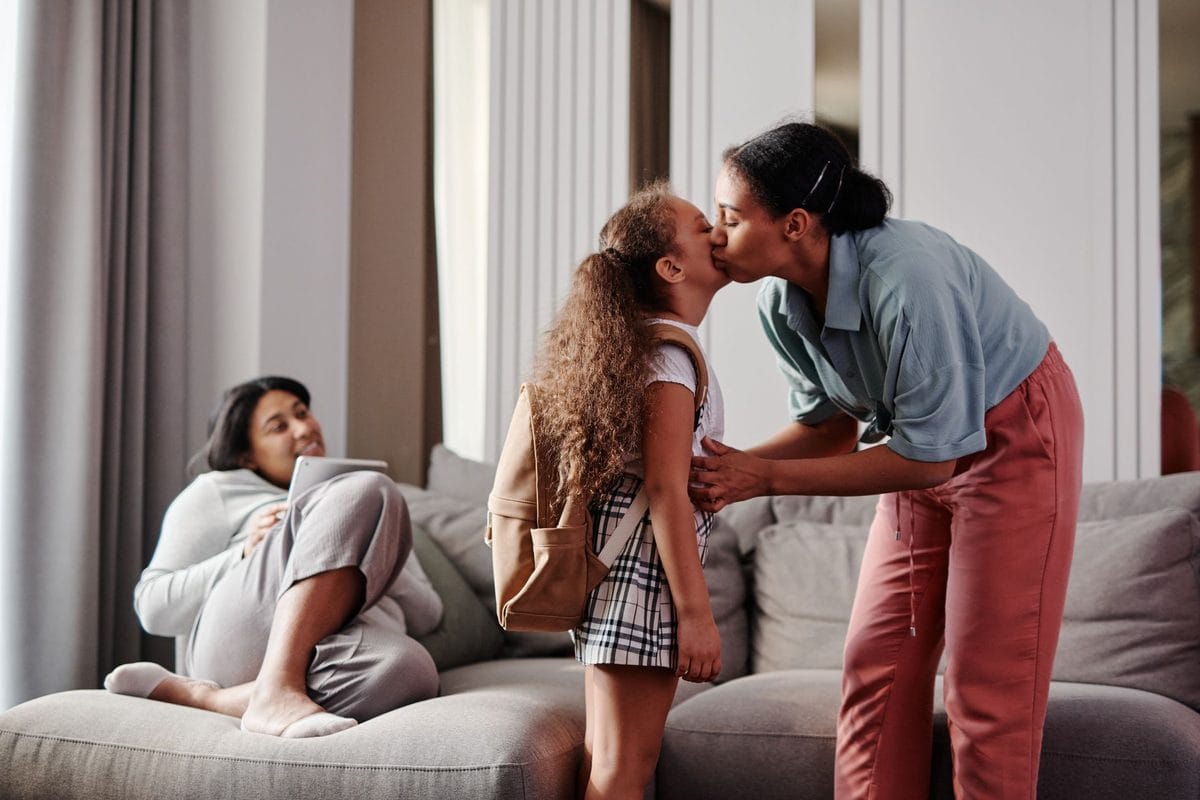
Three weeks before her son started kindergarten, Maria noticed he'd stopped finishing dinner. Not dramatically — he just picked at it, pushed food around the plate, and asked the same question four nights in a row: "Will you know where to pick me up?" He'd never been anxious about anything specific before, and he hadn't even set foot in the building yet. That's the part most parents miss: anticipatory school anxiety rarely waits for the first day. It shows up in the gap between hearing "you start in three weeks" and actually walking through the door, and it can look nothing like the meltdown everyone braces for at drop-off.
This kind of worry is different from the daycare drop-off distress you might already know how to manage — that's an in-the-moment reaction to separation. Anticipatory anxiety is a slower burn. It builds in a child's imagination over days rather than minutes, and because there's no obvious trigger in the room, parents often miss it until it's already loud: trouble falling asleep, a sudden interest in "what if," stomachaches with no medical cause, or a kid who wants to sleep in your bed again after two years of not needing to.
Why the Worry Shows Up Before the Backpack Is Packed
Kids under eight don't process time the way adults do. Ask a five-year-old how long until Saturday and you might get "twenty minutes" or "a million days" — the calendar doesn't organize their inner experience the way it organizes yours. What does organize it is emotional weight, and back-to-school carries a lot of that weight for a long stretch: new teacher, new room, new classmates, new rules, sometimes a new building entirely. Without a concrete picture to fill that space, a child's imagination fills it instead, and imagination during an anxious stretch tends to skew toward the worst version of events rather than the average one.
That's why the anxiety often peaks in the two-to-three-week window before day one rather than on the morning itself. By the actual first day, a child has had time to habituate to the idea, even if the idea is still uncomfortable. The stretch in between — when the change is real but not yet happening — is where the nervous system has the least information and the most room to speculate. Some pediatric behavior specialists call this "anticipatory anxiety," distinct from the separation anxiety that shows up at the classroom door, and it responds to different tools than a hard goodbye does.
What Anticipatory Anxiety Actually Looks Like at Different Ages
Preschool and Pre-K (Ages 3–5)
At this age the worry rarely comes out as words. It shows up as regression — a child who's been dry at night for a year suddenly has two accidents in a week, or one who gave up the pacifier in spring wants it back in August. Clinginess spikes at bedtime specifically, since that's the quiet stretch with nothing to distract from the thought. Some kids fixate on a single logistical detail — who picks them up, whether their old teacher will be there, what happens if they need the bathroom — and asking the same question over and over isn't defiance or a stall tactic. It's a nervous system trying to gather enough information to feel safe, and answering patiently, the same way each time, does more good than trying to redirect the conversation.
Early Elementary (Ages 6–8)
Older kids can name the feeling more precisely, which sometimes makes it look worse than it is. "I hate school" or "I'm not going" lands harder coming from a seven-year-old than a vague cry from a three-year-old, but underneath it's often the same anxiety wearing bigger words. Watch for physical complaints with no clear cause — stomachaches that appear only on weekday mornings, headaches that vanish by 10 a.m., a sudden loss of appetite at breakfast specifically. These aren't manipulation. Anxiety produces real physiological effects on digestion and appetite, and treating the complaints as excuses tends to make a child stop reporting them rather than stop feeling them.
The Practice-Run Method: What Actually Shortens the Adjustment
Reading books about starting school helps a little. Walking the actual route helps a lot more. The gap between "school" as an abstract word and "school" as a specific hallway with a specific smell and a specific door your child will walk through is exactly the gap anxiety lives in, and closing it with real sensory information does more work than any reassurance you can offer out loud.
- Drive or walk the route to the building at least three times before day one, ideally including the actual drop-off point.
- If the school allows a preview visit — most do, and it's worth calling to ask even if it isn't advertised — go during a quiet hour, not an open house crowded with other families.
- Practice the goodbye itself, not just the building. A short, consistent phrase and a specific gesture, like a two-finger tap on the palm or a particular high-five, gives a child something predictable to hold onto in a moment that otherwise has none.
- Rehearse the morning routine on a non-school day — getting dressed, eating breakfast, walking to the car — so the sequence feels familiar rather than brand new when it counts.
- Meet the teacher by name before day one if you can, even briefly.
This works well for most kids — but not for the ones who cope with anxiety through avoidance rather than exposure. For a child who shuts down at the mere suggestion of an early visit, forcing a preview can backfire, handing them a vivid new image to worry about for three more weeks instead of the vague one they hadn't fully pictured yet. If your child physically resists the walk-through, don't push it. A photo of the classroom and a five-minute conversation about what to expect does nearly as much good with far less resistance.
What Not to Do, Even Though It Feels Helpful
Reassurance has a shelf life.
Telling an anxious child "it's going to be great, you'll have so much fun" on repeat does something counterintuitive: it teaches them their worry isn't being heard, which usually increases the behavior instead of calming it. A handful of specific patterns make anticipatory anxiety worse instead of better, even when parents mean well by them.
- Over-promising a perfect experience ("you're going to love it") sets a bar the actual first week can't clear, and disappointment stacked on top of anxiety is worse than anxiety alone.
- Talking about the transition constantly in the final days turns it into the only topic in the house, which tells a child's nervous system this is a bigger deal than it needs to be.
- Letting a child skip the goodbye routine "just this once" because they're upset removes the one predictable anchor they have, and it tends to make the next goodbye harder, not easier.
- Bribing compliance with a toy tied specifically to walking through the door treats the anxiety as a behavior problem instead of a feeling that needs acknowledgment, and once the bribe stops working there's nothing underneath it.
Skip the pep talk. A calm, matter-of-fact tone does more than enthusiasm ever will, because kids read the emotional temperature of a room before they process the words in it.
Talking About the Feeling Without Making It Bigger
Fred Rogers put it simply decades ago: anything that's human is mentionable, and anything mentionable becomes more manageable. That holds up. Naming the feeling out loud — "you're nervous about the new classroom" — doesn't plant the idea, because the idea is already there. What naming it does is signal that the feeling is allowed to exist in the room without needing to be fixed immediately, which is different from what most adults instinctively do, which is jump straight to solving it.
Ask what specifically worries them rather than whether they're worried in general. "Worried" as a yes-or-no question invites a shrug, while "what part feels hardest to picture" invites an actual answer you can work with. If your child says the hardest part is not knowing where the bathroom is, that's solvable in one sentence. If they say they're scared no one will sit with them at lunch, that's a different conversation — and it might be the one that actually matters. Don't assume you know which one it is until you ask.
When the Worry Doesn't Fade After Week Two
Most anticipatory anxiety softens once the routine becomes familiar, usually within the first two weeks of actual attendance and sometimes faster for kids who've already been through a transition like this once. If it doesn't start easing by then, or if it comes with appetite loss lasting more than a few days, sleep disruption that isn't improving, or a return to behaviors your child hasn't shown in over a year, that's worth a conversation with your pediatrician rather than more waiting. Anxiety that doesn't respond at all to routine and predictability sometimes has a different driver underneath it — an actual incident at school, a bigger family change happening in the background, or a temperament that needs more support than a practice walk can provide. Trust that instinct if it's telling you this one is different.