The 7:40 a.m. Problem
It is 7:40 on a school morning, the bus is due at 7:55, and somebody has just found Tuesday's lunch box at the bottom of a backpack. Most families who fight about lunch are not really fighting about food. They are fighting about time, and the time disappears before anyone has eaten breakfast. A prettier bento box or a meal-planning app does not fix that. Moving the decisions to a day when nobody is hungry, late or hunting for a shoe does. A single block on Sunday handles most of the work. The system below takes about forty minutes for five school lunches for two children, assuming a standard oven and a fridge with room for a few containers. Nothing here requires a subscription or a particular brand, although a few good containers make the routine easier to keep.
The Forty-Minute Sunday Block
Set a timer and work in this order, because the order saves the most minutes. Start with anything that needs the oven, since it runs while you do everything else. Cut the fresh produce last so it stays crisp in the fridge until morning.
- Roast two sheet pans of chicken thighs or turkey meatballs at 400°F for about 25 minutes.
- Hard-boil a dozen eggs and cool them in cold water before peeling.
- Cucumber, carrot sticks and bell pepper, cut into pieces a five-year-old can grip, because kids eat more when the pieces are small enough to hold.
- Portion yogurt into small tubs, and keep granola in a separate bag until morning.
- Wipe the inside of every container, since a sticky lid is the first thing a child notices.
Forty minutes is realistic for this list if the oven is already hot. Without the oven, add about fifteen minutes, mostly for the eggs to cool.
Which Proteins Batch Well
Chicken thighs, meatballs and hard-boiled eggs keep three to four days in the fridge when cooled quickly and sealed, which covers Monday through Thursday. Friday needs a different plan, usually a fresh sandwich or leftovers reheated that morning. Deli meat is the weak link. It is fine on Monday and tired by Wednesday, and it does not reheat well. Cooked lentils and chickpeas hold up nicely, though a child who refuses anything beige will not touch them, and it is worth learning that before buying a whole bag.
Splitting the Work Between Two Adults
If two adults share the week, split the tasks by station rather than by day. One person owns the oven and the proteins, while the other owns the produce, the containers and the shopping list. The station model avoids the common failure where both people cook the same chicken on Sunday and nobody washes the containers. Keep the shopping list on a shared note that both phones can edit, and write items as soon as they run low instead of on Sunday afternoon. A ten-minute check-in on Sunday evening catches the missing ingredient before the store closes. Most families find that the first Sunday takes an hour, and the third takes forty minutes.
Containers Are Half the Battle
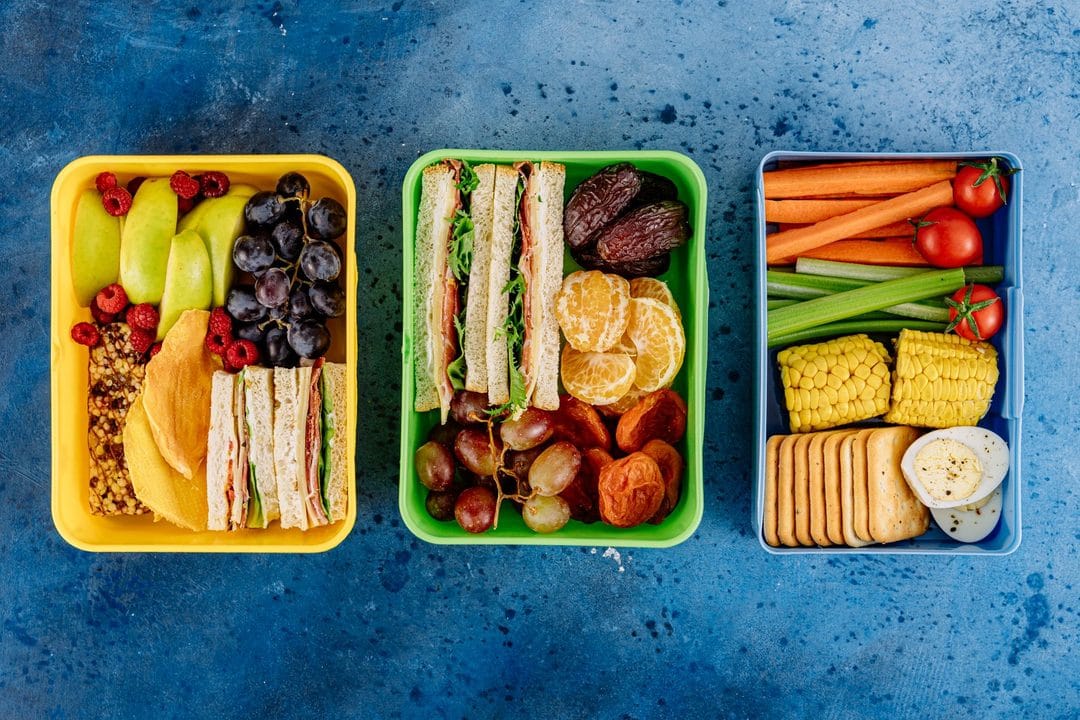
Buy one three-compartment container per child and stop there. A divided tray lets a child see every item at once, which matters more than the logo on the lid. Bentgo and Yumbox both make leakproof versions that fit a standard lunch bag, and either is a sound choice. A store-brand box works just as well if the lid seals. For hot food, a vacuum flask such as a Thermos FUNtainer is the only container worth the money, because it keeps soup or pasta warm past noon when a plastic box does not. Skip the matching novelty bento sets. They photograph well and split at the hinge by February.
Food Safety Is Simple, but It Is Not Optional
Keep anything with meat, eggs or dairy cold until packing, and add an ice pack to the bag. The USDA's danger zone runs from 40°F to 140°F, and bacteria multiply fastest inside it. The real risk is a lunch that sits on a warm counter for an hour before it goes into the bag, not the sandwich itself. Pack lunches the night before, store them in the fridge, and add the ice pack in the morning. A frozen juice box does double duty as an ice pack and is usually thawed by lunchtime.
Preheat a vacuum flask by filling it with boiling water for five minutes, then empty it and add the hot food straight away. A cold flask pulls heat out of soup within the first hour, so the preheat is not optional.
The Foods That Never Make It to Lunch
Some foods look like wins on Sunday and turn into landfill by Wednesday. Sliced apples can be saved with a squeeze of lemon juice, unless your child rejects anything sour, in which case you are back to plain slices and a shrug. Crackers go soft against a wet cucumber slice, so give the wet items their own compartment. Pasta salad with mayonnaise is the classic failure. It needs to stay cold all day, and most school lunch bags do not manage that, so I would take it off the rotation entirely. Yogurt tubes that freeze overnight are a different story, because they thaw into a usable snack by eleven.
Cheese cubes, hummus with pita and apple slices with nut butter all hold well for a day, so they are the safer weekday swaps. Cut the cheese into cubes rather than slices, because slices stick together and tear when a child pulls one free at the table.
The Child Who Eats Only Beige
No lunch box fixes a child who refuses most foods, and pretending otherwise only adds pressure at the table.
That child still gets a packed lunch, but the lunch is built from a short list the child has already approved. Let them choose one protein and one fruit from a shortlist you have approved, and keep everything else on the rules side. Children who choose their own items finish more of them, and the choice takes the decision out of the morning argument. Two protein options and two fruit options are enough. Any more and the choice turns into a negotiation.
Put the Containers Where You Will See Them
On Sunday evening, stack the clean containers on the counter where the child can see them. It sounds trivial. On Monday at 7:40, it is the part that works.