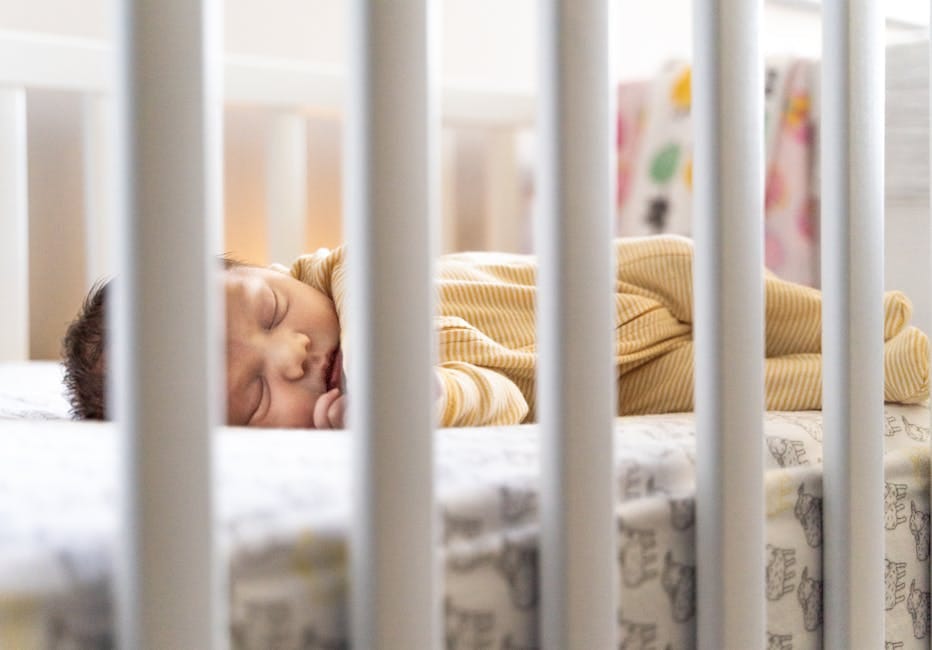
'Sleep training' has become shorthand for one specific harsh method (cry-it-out) when it actually covers a spectrum of approaches. The right one depends on your baby's temperament, age, what's actually waking them, and what you can sustain emotionally for 1-2 weeks.
The spectrum of methods
No-cry methods (Pantley, Elizabeth Pantley's No-Cry Sleep Solution)
Slowly building good sleep associations over weeks. Lowest stress, slowest progress.
Gradual fading (chair method, Sleep Lady)
Parent stays in room, gradually moves further away over 1-2 weeks. Moderate stress, moderate timeline.
Timed checks (Ferber)
Brief check-ins at increasing intervals while baby is fussy. Most common evidence-backed method. 2-7 days typical.
Extinction (cry-it-out)
No interaction once baby is put down. Fastest results, highest parental stress, contentious.
What the evidence actually shows
Multiple meta-analyses (Hall et al. 2015, Bryanton 2018) find sleep training methods don't cause long-term emotional damage when applied to babies 4+ months. They reduce parental depression measurably. Babies typically sleep through within 3-7 days regardless of specific method.
The 'attachment damage' claim from anti-sleep-training advocates isn't supported by the research. Equally, claims that sleep training is essential aren't either — some babies and families do fine never doing it.
When and how to start
Most paediatricians recommend not before 4-6 months (developmental ability to self-soothe). Pick the method that matches your temperament — you can't sustain a method you find emotionally unbearable. Start on a Friday night so you have weekend cover for the worst nights. Consistency for 2 weeks is the minimum fair trial.
There's no single 'right' sleep training method. The wrong choice is the one you can't follow through on. Pick what fits your family, commit for two weeks, then evaluate.